



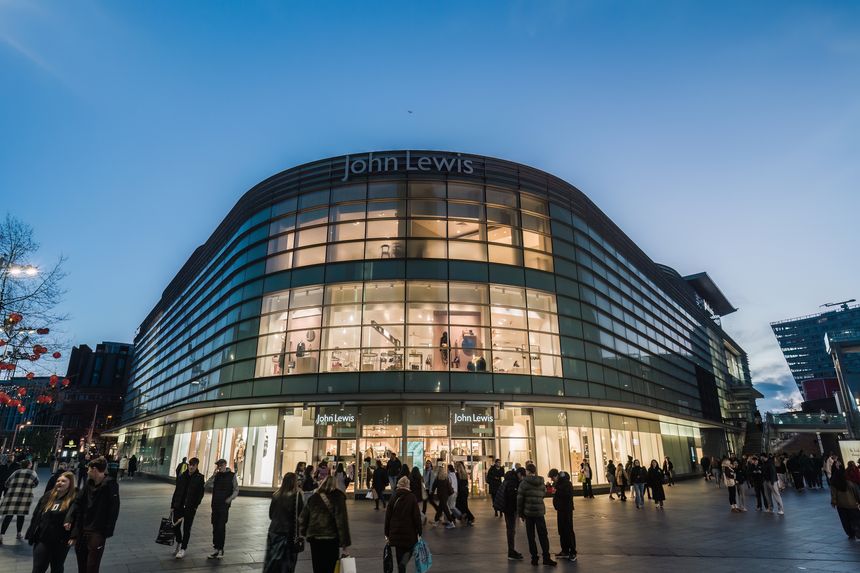

Brent Cross' landlord has lodged a claim at the High Court asserting that John Lewis has underpaid turnover rent. John Lewis' lease, dating back to 1979 , requires them to pay a base rent of £30,000 per year, plus a stepped turnover top up.
Their claim hinges on wording which states that turnover includes orders which originated or are accepted at the premises. At the time drafted however (in the early 1970s) this was intended to capture mail and telephone transactions; today, we have a much broader, and more valuable, way of generating sales via the web. Click-and-collect sales therefore were not excluded in John Lewis' lease over 45 years ago.
However, just because a technology was not available at the time of the drafting, that does not prevent it from being included in a definition: the court will look at the “natural meaning” first, and only then look at the commercial context.
The court's comments on how it interprets the provisions in the lease will be specific to the case, but will have principles which can be applied on many other leases with turnover rent provisions. How the High Court interprets the language in the lease is particularly relevant as the pace of technological advancements progress and leases may be unable to keep pace in capturing future unknowns.
The challenge for businesses is that if click-and-collect does form part of a store's turnover for the purposes of turnover rent under the lease (if unintentionally included), then how do retailers deal with the double cost of the logistics required to fulfil this order, because very often it is not fulfilled from stock at store, and then paying to the landlord a further cut? The reality is that a click-and-collect order does not cost the same to a store as someone walking in and purchasing something. This is not a legal question for the court to answer, but one which has practical implications for businesses. There has always been a debate between landlords and tenants over whether a click-and-collect sale is made at the point of “click” or “collect" when considering its inclusion in turnover rent.
Many retailers who operate hybrid businesses will be watching the decision closely, especially if they have older commercial arrangements which would not have expressly captured click-and-collect in the way it exists today.
Whatever the outcome, the decision will have far-reaching consequences, and any obiter comments on the turnover drafting will very likely bring about more discussion on how these clauses should be interpreted.
The case is a reminder on the importance of attention to drafting and ensuring leases are future-proofed as best as possible as the pace of change only quickens.
/Passle/5ae9851e7bae7607b4016f56/SearchServiceImages/2026-05-15-15-24-44-650-6a073abc331013c89f802e5a.jpg)
/Passle/5ae9851e7bae7607b4016f56/SearchServiceImages/2026-05-07-10-33-40-089-69fc6a84a138426c9bdfd9f8.jpg)
/Passle/5ae9851e7bae7607b4016f56/SearchServiceImages/2026-05-07-09-48-51-924-69fc6003702ea0a595ca0c0f.jpg)