



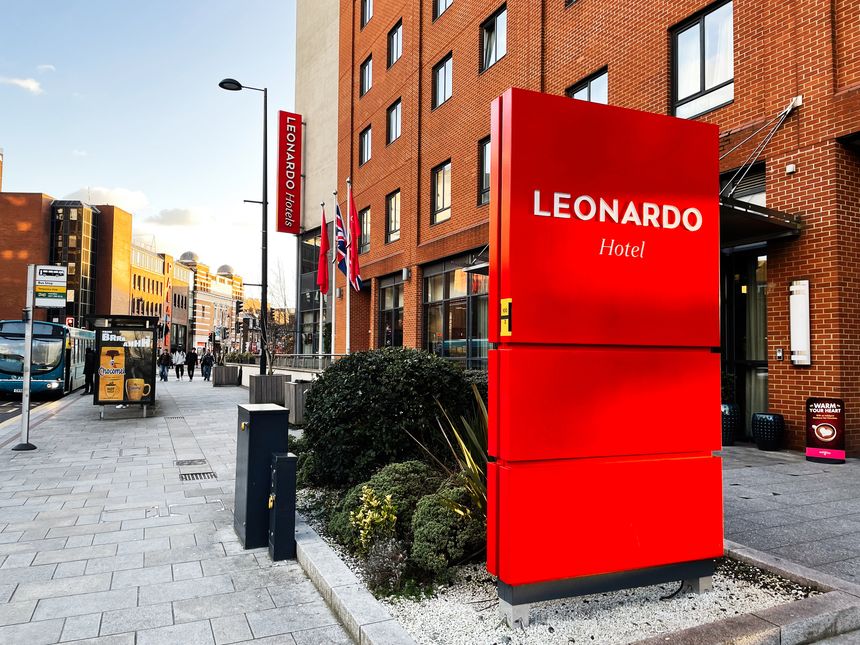

From culture to technology, Ronen Nissenbaum explains what makes hotels thrive in competitive markets. As CEO for the UK, Ireland, Benelux, Spain, Portugal and US development at Fattal Hotels, Ronen Nissenbaum is shaping one of Europe’s most fast-moving hospitality portfolios, home to brands such as Leonardo, NYX and the quietly glamorous Herods.
With new Hotels from Ireland to Barcelona Ronen is steering the groups Western European area through a moment where lifestyle, locality and loyalty are being rewritten all at once.
In a sit-down conversation with Anthony Hunt, Head of Hotels at Howard Kennedy, he shares how Fattal plans to win not just market share, but hearts and what the next generation of luxury-leaning travellers really expect when the lobby doors slide open.
From a regional challenger to one of the most talked-about hotel groups in Europe, what is driving that momentum? Is it daring decisions, lucky timing, or something in the culture?
It’s the culture. That’s probably the strongest reason for our success. Our owner and CEO, David Fattal, is incredibly assertive about development. Over the last 25 years, his track record has given people confidence in deal certainty when working with us. If we say we’re interested in a property, brokers and sellers know we’ll follow through. That reputation for reliability has been consistent for decades. If David says something, he does it—and that consistency builds trust.
Your portfolio ranges from cool urban Nyx hotels to refined properties like Herods. How do you stop a collection of hotels from feeling like a pick-and-mix of brands and make it cohesive?
Compared to big players like Marriott or Hilton with 40 brands, we only have five or six. Our core brand is Leonardo, which includes Leonardo, Leonardo Boutique, Royal Leonardo, and Limited Edition by Leonardo for five-star properties. Nyx is our lifestyle brand, similar to CitizenM or Kimpton. In Israel, we have additional brands like Herods and Magic Palace due to market size, but in Europe, it’s primarily Leonardo, Nyx, and Master (our serviced apartments). Each brand is clearly differentiated by market segment, so there’s little confusion. Even in cities where we have multiple hotels, like Munich or London, we work hard to keep the brands distinct.
Hotels today are judged as much on atmosphere as on thread count. Where does the ‘soul’ of a great hotel come from—design, people, or something harder to define?
Culture. Design and concept matter, but the guest experience is created by the team. Friendly, happy staff make the biggest difference. Leadership sets the tone, if the CEO is humane and caring, that culture permeates through regional managers, GMs, and staff.
We hire carefully to maintain that culture locally, ensuring teams reflect their region while staying true to our values.
I often say, ‘The fish stinks from the head.’ If leadership is toxic, that trickles down. But if leadership is warm and respectful, that spreads too. Guests constantly tell us, ‘Everyone was so friendly and smiling.’ That’s not luck—it’s drilled into our culture. Great people can even compensate for a tired product. A smile at reception can turn a mediocre stay into a memorable one.
Expanding into cities with plenty of hotel options, how can Fattal still surprise seasoned travellers?
We measure success against the market using fair share and Revenue Generation Index (RGI). If we’re 10% of the market, we aim for at least 10% of demand—but we consistently achieve 10–15% above that.
In London, for example, our five hotels outperform major brands like Hilton and Marriott. Last year, we were 10–15% ahead of big names like Accor and InterContinental. That performance gives us confidence to compete and improve properties we acquire.
We don’t rely on ‘feelings’ – we rely on STR reports and hard data. If a hotel is underperforming, we know how far we can take it because we’ve done it before.
Modern travellers want tech efficiency and human warmth. Where’s the sweet spot between digital convenience and personal connection?
Technology shouldn’t replace people; it should make interactions more efficient. Automating check‑in, payments, and back-office tasks frees staff to spend quality time with guests.
The real luxury is choice – guests should decide whether they want full human interaction or a seamless digital experience.
Think of airports: sometimes you want to skip the desk and go straight to the gate; other times you want help. Hotels should offer the same flexibility. If you want to order a drink via an app and have a robot deliver it, great. If you want a concierge to recommend the best theatre, that option should be there too.
Sustainability is becoming a luxury marker. Beyond reusable bottles and green pledges, what should hotels do?
Sustainability isn’t a luxury – it’s essential. Like Wi-Fi, it’s gone from ‘nice to have’ to ‘must have.’ Our approach focuses on three pillars:
1. Measurement & Accreditation: Quantify carbon footprint, reduce it, and gain recognised certifications like Green Key.
2. Legislation & Accountability: Align with legal requirements and set KPIs for each hotel, linking them to bonuses.
3. Communication: Share progress internally and externally – customers and corporate partners demand transparency in RFPs and on websites.
We incentivise behaviour by making sustainability part of performance metrics and bonus programmes. And we communicate our ESG commitments clearly to guests and corporate clients.
You’ve worked across the US, Asia, Israel, and Europe. Which cultural traits would you bring into every Fattal property?
• US: Professionalism, efficiency, and friendliness – even if it feels scripted, it makes guests feel seen.
• Europe: Rich cultural heritage and localisation – our hotels reflect their country’s identity. Breakfast in Spain is authentic Spanish; in Holland, Dutch.
• Israel: Warmth and exceptional food culture. Our breakfasts often include 10 cheeses, yogurts and fresh salads because that’s what Middle Eastern guests expect.
• Asia: Humility in service. In Thailand, Singapore and elsewhere, serving is a source of pride.
If we meet again in five years, what will surprise us most about the hotel industry, and what do you hope Fattal will be remembered for?
Hospitality is thousands of years old – the basics won’t change. Technology and automation will advance, but human interaction will remain irreplaceable.
Expect more branded hotels and fewer independents, plus greater use of AI and robotics for back-office tasks.
Supply growth is historically low while demand rises, so the outlook is positive. Even with economic uncertainty, fundamentals are strong.
I hope Fattal is remembered for delivering exceptional experiences through culture, efficiency, and warmth from the heart – not just technology. The lasting memories come from human interactions – a genuine smile, a chef teaching your kids to cook or a GM taking you on a morning hike. Robots can’t replace that, at least not in the coming decade.
Want to learn more about the outlook for the hospitality industry? Download our latest On the EDGE: Hospitality trends in 2026 report.
/Passle/5ae9851e7bae7607b4016f56/SearchServiceImages/2026-05-15-15-24-44-650-6a073abc331013c89f802e5a.jpg)
/Passle/5ae9851e7bae7607b4016f56/SearchServiceImages/2026-04-29-09-54-00-143-69f1d53838457abc5de4014f.jpg)
/Passle/5ae9851e7bae7607b4016f56/SearchServiceImages/2026-05-07-10-33-40-089-69fc6a84a138426c9bdfd9f8.jpg)